*Updates*
24 hours later, the White House and some politicians are hitting back at Cheney.
My favorite comment comes from Chris Matthews:
"Chris Matthews, at the opening of MSNBC's Hardball, said Dick Cheney is 'attacking the Obama White House for investigating the abuse of prisoners. He is taking the unusual role of defending the CIA itself, an agency he bullied and ridiculed for eight years in his role as vice president. And is he's getting hit by John McCain, who has two advantages over Cheney. One, he knows what it means to be tortured. Two, he knows what it means to serve his country.'"
Reuters also says Obama's National Security Adviser, General Jim Jones, is trying to prove Cheney wrong. Oddly enough, General Jones wants a pullout from Afghanistan. But just because the top commander in Afghanistan didn't request more troops in his report, doesn't mean Obama isn't listening. I know for a fact that Obama holds David Petraeus in utmost regard, he's not going to cause an embarrassment.
Original Post:
Good summary of the former VP's comments:
And lastly, John McCain's comments on "Face the Nation" yesterday.
31 August 2009


28 August 2009
Best of Ted
In my mind the most important thing Ted Kennedy ever did was help change the voting age to 18, suddenly giving a political voice to millions of young people that previously had none.
He was liberal, yes, but he was a broker. He was the one who got people to agree on things, and now only two days after he's gone, the Senate and House have descended into chaos. Democrats are on a kick that they ought to pass health care reform as a symbol of the man. Republicans are on a moral stance that health care shouldn't be politicized (kind of hypocritical, no?). Senator Orin Hatch of Utah said it most simply on ABC News: "some are saying let's pass the bill in honor of Ted, but I'm saying, hold on a minute, he would want us to pass something that's good."
Kennedy's morals were always above the rest it seems, when he said during debate of the voting age law, "If at 18 you are old enough to be drafted to fight for your country, then you should be old enough to elect leaders that might send you to do so."
He was liberal, yes, but he was a broker. He was the one who got people to agree on things, and now only two days after he's gone, the Senate and House have descended into chaos. Democrats are on a kick that they ought to pass health care reform as a symbol of the man. Republicans are on a moral stance that health care shouldn't be politicized (kind of hypocritical, no?). Senator Orin Hatch of Utah said it most simply on ABC News: "some are saying let's pass the bill in honor of Ted, but I'm saying, hold on a minute, he would want us to pass something that's good."
Kennedy's morals were always above the rest it seems, when he said during debate of the voting age law, "If at 18 you are old enough to be drafted to fight for your country, then you should be old enough to elect leaders that might send you to do so."
26 August 2009
CIA Addendum
*Further Update* Vice President Cheney, on Fox News Sunday, said he thinks AG Holder is being extremely partisan, acting on a political play to hurt America's capacity to fight terrorism.
However, John McCain, god bless him, said, "I think the CIA interrogations aided Al Qaeda in recruiting...and hurt our ability to make alliances abroad, and, according to the FBI, there were other ways to perform these interrogations [within the law]."
*EDIT* I forgot to also reference the other set of "torture memos" released in April that was from a CIA Counsel. These are the documents Cheney repeatedly refers to when he wants to make the case that torture "saved American lives."
This will be much less complex than the previous post, but it's important information nontheless. I was shocked with some of the wording by reporters and some of the comments from the sources in the newspapers today about more details in this investigation.
Three things are happening: (1) The White House is in a squabble with Dick Cheney, (2) Congressional reaction to the investigation, and (3) how much of the information is being kept quiet by the Obama Administration.
Clearly Obama hates America.
Per ABC News:
"former vice president Cheney said yesterday that the probe 'serves as a reminder why so many Americans have doubts about this Administration's ability to be responsible for our nation's security.'"
POLITICO tells of a Republican Congressman who said the following:
"You wonder which side they're on"
And again, Michigan's own Pete Hoekstra, stirring the fire, said:
"We need a CIA that is focused on keeping American troops safe and winning this war, not worried about what politicians and the Justice Department in Washington, D.C. may do to them for doing their job"
They were in fact not doing their job, Congressman. They broke the law. But it was in the interest of national security so therefore it's okay in your book. Dang fool.
WaPo columnist David Ignatius is worried that the CIA will have its hands tied (or perhaps, shackled?) the next time there is something at stake. It's interesting that a CIA agent would want to call a lawyer before dumping gallons of water in someone's face. And Joe Scarborough, a man I typically respect, foolishly said this morning on his TV show, "the best and brightest are running out of the CIA this morning."
The two most bizarre editorials come from the two biggest papers. I have never read a New York Times editorial and thought, "do they know what they're saying!?" They want it to become political, even though they understand it can't be, and want the higher-ups to be prosecuted. WaPo also says essentially, "Obama caved in to Bush" (my words).
Darth Cheney claims he was right.
Despite the former Vice President saying the above comment, his biased biographer says:
'The Weekly Standard's Stephen Hayes, who has written a sympathetic biography of Cheney, said on Fox News' Special Report, "The document that was released yesterday that describes pivotal information gained from detainees as a result of interrogations is actually dated June 3. The one that Cheney requested was dated June 1st. There is, I'm told by an intelligence source, more information in the June 1st one.'"
Apparently, Cheney didn't tell us everything? He is glad some Agency officer waterboarded Khalid Shaykh Mohammed 183 times in order to find out information that might have been false. I read that as, his claim that without these interrogations they would have gotten nowhere is totally false. LA Times agrees.
Obama knows more?
While all of this is shocking, there seems to be some conjecture among the media that Obama isn't doing enough. The appointment of a career CIA officer to oversee the interrogation rules and their changes isn't a reason to freak out and say nothing is going to change.
POLITICO also says, Obama is in bed with the Bush administration on investigating the CIA.
Strangely, The NYT and Wapo have concurring articles that suggests the CIA was in control of the interrogations, and even did some cleaning house when Khalid Shaykh Mohammed almost died.
There is obviously a lot we *don't* know, but it just seems like the media reversed some of its approval of what Obama did, and also got some absolutely STUPID politicians to offer the other viewpoint. However, the larger issue is that this is turning into a political mess. Am I wrong?
However, John McCain, god bless him, said, "I think the CIA interrogations aided Al Qaeda in recruiting...and hurt our ability to make alliances abroad, and, according to the FBI, there were other ways to perform these interrogations [within the law]."
*EDIT* I forgot to also reference the other set of "torture memos" released in April that was from a CIA Counsel. These are the documents Cheney repeatedly refers to when he wants to make the case that torture "saved American lives."
This will be much less complex than the previous post, but it's important information nontheless. I was shocked with some of the wording by reporters and some of the comments from the sources in the newspapers today about more details in this investigation.
Three things are happening: (1) The White House is in a squabble with Dick Cheney, (2) Congressional reaction to the investigation, and (3) how much of the information is being kept quiet by the Obama Administration.
Clearly Obama hates America.
Per ABC News:
"former vice president Cheney said yesterday that the probe 'serves as a reminder why so many Americans have doubts about this Administration's ability to be responsible for our nation's security.'"
POLITICO tells of a Republican Congressman who said the following:
"You wonder which side they're on"
And again, Michigan's own Pete Hoekstra, stirring the fire, said:
"We need a CIA that is focused on keeping American troops safe and winning this war, not worried about what politicians and the Justice Department in Washington, D.C. may do to them for doing their job"
They were in fact not doing their job, Congressman. They broke the law. But it was in the interest of national security so therefore it's okay in your book. Dang fool.
WaPo columnist David Ignatius is worried that the CIA will have its hands tied (or perhaps, shackled?) the next time there is something at stake. It's interesting that a CIA agent would want to call a lawyer before dumping gallons of water in someone's face. And Joe Scarborough, a man I typically respect, foolishly said this morning on his TV show, "the best and brightest are running out of the CIA this morning."
The two most bizarre editorials come from the two biggest papers. I have never read a New York Times editorial and thought, "do they know what they're saying!?" They want it to become political, even though they understand it can't be, and want the higher-ups to be prosecuted. WaPo also says essentially, "Obama caved in to Bush" (my words).
Darth Cheney claims he was right.
Despite the former Vice President saying the above comment, his biased biographer says:
'The Weekly Standard's Stephen Hayes, who has written a sympathetic biography of Cheney, said on Fox News' Special Report, "The document that was released yesterday that describes pivotal information gained from detainees as a result of interrogations is actually dated June 3. The one that Cheney requested was dated June 1st. There is, I'm told by an intelligence source, more information in the June 1st one.'"
Apparently, Cheney didn't tell us everything? He is glad some Agency officer waterboarded Khalid Shaykh Mohammed 183 times in order to find out information that might have been false. I read that as, his claim that without these interrogations they would have gotten nowhere is totally false. LA Times agrees.
Obama knows more?
While all of this is shocking, there seems to be some conjecture among the media that Obama isn't doing enough. The appointment of a career CIA officer to oversee the interrogation rules and their changes isn't a reason to freak out and say nothing is going to change.
POLITICO also says, Obama is in bed with the Bush administration on investigating the CIA.
Strangely, The NYT and Wapo have concurring articles that suggests the CIA was in control of the interrogations, and even did some cleaning house when Khalid Shaykh Mohammed almost died.
There is obviously a lot we *don't* know, but it just seems like the media reversed some of its approval of what Obama did, and also got some absolutely STUPID politicians to offer the other viewpoint. However, the larger issue is that this is turning into a political mess. Am I wrong?
25 August 2009
<3 Bioware <3

The first substantial footage of "The Old Republic" from Gamescom '09
Of course Blogger doesn't like G4's videos, so link here.
I'm curious to know if they're planning on having players from both "sides" be able to go through that same quest at (nearly) the same time. It would be really great if among those Republic troopers popped out a human-controlled player to fight with...but maybe they've thought up another way to do that.
The United States Does Not Torture
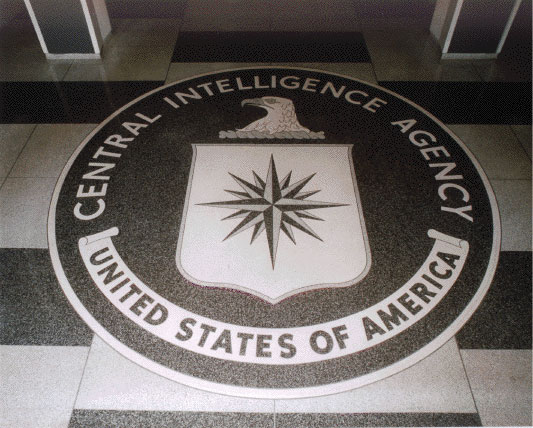
Right???
RIGHT!?
NO!?
Dammit!
The Inspector General of the Central Intelligence Agency says otherwise.
That report is the focus of a plethora of media coverage at the start of this week, and the ensuing legal mess after it will occupy my mind for a long while. Some reporters are flipping out about this, but The New York and LA Times have the most neutral stories; NYT focuses on the decision to declassify the report, while the LAT details Attorneys General Eric Holder's plan for an investigation. The wording of "preliminary investigation" is always ominous, because it's clear the AG wants to eventually do a full investigation as to whether federal laws were violated by CIA agents, and whether it would warrant prosecution. In the NYT piece, meanwhile, Holder is quoted as saying, “As attorney general, my duty is to examine the facts and to follow the law," yet makes a clear distinction that he's not trying to backtrack and pick apart everything that the Bush administration authorized, as President Obama said publicly.
He's only after what was legal and what was not, but why is he appointing a special prosecutor from a US Attorney's office in Connecticut, when he clearly doesn't want to go on a witch hunt of CIA interrogators that were authorized by the Bush administration to torture terrorist suspects?
Holder is perfectly okay with not being very popular within the Central Intelligence Agency, but is it really up to the Department of Justice to police the CIA? No, that's for the White House to dictate as of now. If the CIA is going to be ordered to turn over control of oversight of interrogation and detention of terrorist suspects, the AG has to just let the National Security Council, a direct arm of The White House, stay within the limits of the law. It's not the job of the Attorney General's Office to interfere with internal CIA discretion...but I'm perfectly OK with him stepping in when the legality of torture is in question.
Too often the CIA claimed its methods were in the interest of national security, and when Michigan's own Congressman Pete Hoekstra says review of interrogations has been "exhausted," I take issue with that. There are laws to be followed, and one example of when the law was not followed was with cases of rendition. Rendition is a loose policy for transporting suspected terrorists to countries that don't follow federal or international law, so that those prisoners can be abused to extract information. The President put a semi-stop to that this week, too, by reforming how renditions are exercised.
The CIA sidesteps federal law, but Attorneys General Holder has every right to order an investigation when a detainee is not being given his rights under international law. The Geneva Convention sometimes applies, also, but there are semantics as to who exactly is a Prisoner of War. And that's what led to the release of both the Justice Department report and the CIA Inspector General's report. Inter-agency communication -- or the lack therof recently -- led to intelligence mistakes. Holder is correcting those gaps by saying the information currently available renders a review of torture techniques. He MUST be careful and not go after CIA agents, but to just go after the *process* and what wasn't done to ensure the law was being followed. He's trying to find the source of who made the decisions, because there's documents detailing that these torture techniques were authorized by the Justice Department, who (previously) had legal oversight over the CIA.
In lamen's terms: Did the CIA infer too much as to what was authorized by our own government? And I suspect too that some questions will be directed at our former Vice President, Dick Cheney. The CIA can claim all it wants that these methods produced concrete information:
"One of the reports calls the program 'a crucial pillar of U.S. counterterrorism efforts' and describes how interrogations helped unravel a network headed by an Indonesian terrorist known as Hambali. The other report details information elicited from Kalid Shaykh Mohammed, chief planner of the Sept. 11, 2001, attacks, saying it “dramatically expanded our universe of knowledge on Al Qaeda’s plots.'”
But I want to know why the law wasn't followed, and that's what Prosecutor Durham's job will be. It's not good when the CIA themselves say their conduct in treatment of prisoners was "poor and inhumane."
At the top of the list is the use of waterboarding, but here's the problem: The Justice Department -- specifically former AG Alberto Gonzales -- authorized the use of waterboarding! Holder has to do two things: find out who (CIA agents that is) disobeyed what was allowed by the Justice Department, and find out which specific cases have legitimate claims to a prisoner's rights being violated by things that the Bush Administration authorized (legally or not).
When referring to waterboarding or water dousing, the CIA IG wrote:
"Such detailed guidelines reflected concern throughout the C.I.A. about the potential legal consequences for agency officers. Officers “expressed unsolicited concern about the possibility of recrimination or legal action” and said “they feared that the agency would not stand behind them”
In a nutshell, that's what I think Holder is looking for: the officers that voluntarily violated the law and making sure the guidelines are changed and followed. Not finding out all the Bush officials who authorized the stuff in the first place...because it was the CIA that tried to cover up bad treatment of prisoners. The Bushies just didn't ask about it, that's not a crime.
It's important how he will describe these actions. He cannot stand there and say "well, the Bush administration accepted this policy, so we're going to prosecute them," because at the time it was the law; instead he has to say "The CIA broke the law in cases X, Y, and Z, and here's what we're doing to correct it so it doesn't happen again." Let the CIA handle reforming its practices, because their director, Leon Panetta, has said they will do so:

"The program had produced crucial intelligence...but harsh methods will remain a legitimate area of dispute.”
He's standing by his employees, but also recognizing that there has to be some examination.
The United States does not torture. Even John McCain wanted that to be a policy of this country. Sometimes following the law is more important than intimidating the crap out of a scared prisoner that just divulges false information to be spared of this:

The CIA IG report is mostly a blacked-out mess, but there are some pretty unsettling things. Just running down the table of contents, there is a section on techniques such as water dousing, use of smoke, pressure points, mock executions, hostile takedown (abuse), shackles, and stress positions. Then it explains the effectiveness of these techniques, and concludes that said effectiveness of capturing other terrorist suspects or preventing attacks "cannot easily be measured."
The Agency says they captured a big-name terrorist, Abu Zubaydah, and under pressure of preventing more terrorist attacks, sought to locate a facility where they could torture him. The details of his interrogation are blacked out, but they are careful to note that he was provided medical attention, and that they foresaw no legal issue, as they had followed all approved techniques.
There are specific cases of "Enhanced Interrogation Techniques" -- EITs -- on a number of suspects. They admit to waterboarding a suspect named Al-Nashiri, and Mr. Zubaydah, multiple times, and actually videotaped the procedure (part of the group of tapes that were destroyed by CIA or overwritten with blank recordings)...but they claim the waterboarding lasted no longer than "10 seconds" each time.
These same two men were subjected to further treatment. The details are slim, but it involves one of them being naked, hooded & shackled, while an Agency debriefer (interrogator) threatened to use a handgun and a power drill on them. The Agency officer denies this next part, but the IG claims they threatened to rape Al-Nashiri's mother in front of him, and when interrogating Khalid Shaykh Mohammed, they suggested they would kill his children.
The next 40 pages are blacked out, and the last few pages detail that these methods in turn lead to the capture of some other terrorists, and that any agents who exceeded authorized interrogative methods were given domestic assignments (such as one man who beat prisoners with the butt of a rifle). The only method I could find that was explicitly "not approved" is an instance where two debriefers, one claiming that he knew what he was doing, choked a man to the point of suffocation by strangling the carotid artery, and shook him awake when he was about to pass out. They then staged an execution of a fellow prisoner that was actually disguised guard, but deemed it "ineffective," but didn't report it.
The United States Does Not Torture.
Right?
21 August 2009
While I Was Away...
After spending three days in Washington, D.C., there were some big things that happened while I was there. Bob Novak passed away from brain cancer, the Pan Am 103 terrorist was let out of prison by the Scottish government, and "60 Minutes" creator Don Hellman passed away.
I'm there for three days and all this happens!? Don't want to imagine what else would happen if I actually *live* there!
I'm there for three days and all this happens!? Don't want to imagine what else would happen if I actually *live* there!
11 August 2009
Afternoon News Lull
I don't see how Obama can't invite Israel to a nuclear summit. The only solution is to negotiate a disarmament for a more stable Middle East. The United States is sworn to protect Israel but not if it decides to fire a nuclear weapon at Iran...
Obama is paying more attention to Afghanistan, but the casualties are still rising. For the love of God, Mr. President, DO continue to listen to David Petraeus because it will work. The civilian surge that General McChrystal also wants is a necessary supplement. Not going to destroy the corrupt government we installed there without people on the ground to dismantle the opium farms and get elections going.
Obama is paying more attention to Afghanistan, but the casualties are still rising. For the love of God, Mr. President, DO continue to listen to David Petraeus because it will work. The civilian surge that General McChrystal also wants is a necessary supplement. Not going to destroy the corrupt government we installed there without people on the ground to dismantle the opium farms and get elections going.
Google Isn't Evil...just, ill-tempered
Updated version of an earlier piece:
 The Google Democracy
By Kevin Bunkley
In an era of liberal government and blank-check spending, business is often the first casualty. Not so with the nation's most beloved internet company, Google. Since its IPO in 2004, Google has added an infinity of o's to its name. Critics often warn of some doomsday-like event in which Google unites with the federal government to penetrate every waking moment of our lives, and everything in them is sold to us by Google. I had my money on Microsoft becoming "Big Brother" first, but as Google grows, and grows...and grows, some would have you think this is bad for business and bad for our lives. In the age of globalization, a bigger Google can only further plug America, and the rest of the world, into each other.
Google's market value and subsequently, market share, is larger than Time Warner, Viacom, its subsidiary CBS, and The New York Times Company. They have every internet service imaginable, a cellular phone, and, in my estimation, the most important advertising operation in the world, AdWords. Competitors -- chiefly Microsoft and Yahoo -- warn of a monopoly business in violation of antitrust laws. Is that why the two companies just signed a ten-year deal to join their laggard search technologies to grab that market share back...after Yahoo's own project with Google was canned by the federal government?
The June issue of Wired magazine, had an article detailing Google's ascent to the powerhouse of online content and advertising and just how the company makes its money. In short, a complex mathematical formula causes a continuous cycling of the advertisements that are being clicked, and opens it up to bidding amongst the companies that want our dollars. Stimulating competition for ad prominence is an economy in itself, and it put a hole in the traditional model of going to an agency to buy ads in newspapers or online. Flattening the playing field has never been in the interest of too much power, but in the interest of advancing how commerce is conducted. The fact that an search engine start-up came up with this before Madison Avenue executives did is an indication that Google may have certain financial advantages in the modern economy.
These divisions have all the makings of a company that is beyond its reach. "Google's mission to 'organize the world's information and make it universally accessible
and useful,' so charmingly visionary in a startup, now sounds to some
people downright predatory in a company of nearly 12,000 employees," wrote Rob Hof in a 2007 Business Week piece. Corporate innovation is cyclical. IBM was at the front of the computer revolution, Microsoft at the integration age, and now Google is helming the internet phase. It's impossible to argue that a company that has made using the internet far more simpler than it was, has become too big and powerful. The only things that can limit Google are people who don't want to join the 21st Century.
Google's sole purpose is to provide information. It's easy to see why their projects to digitize entire University libraries, mainstream books, and other print media are contested as being too accessible at no cost (sometimes known as the "Wikipedia syndrome"), but look at who Google's toughest critics are: competitors and others who stand to gain nothing from the project. If Google were still a start-up search engine with a very small user base, would Microsoft and Yahoo throw a fit? Before allowing the Michigan Digitization Project, the University of Michigan filed suit on behalf of an author's guild since the company was seemingly in violation of intellectual property rights. Michigan is now the biggest advocate of digital book scanning, as economist and Michigan librarian Paul Courant led the charge to keep up with Cornell, Stanford and Columbia allowing access to their library collections. He wrote, simply, on his blog, "I believe Michigan and Google are changing the world."
Google only threatens the traditional information infrastructure that was devoid of balanced competition for almost ten years. Now, the rest are playing catch-up to Google's methods. The problem area is, that if Google has no competition at all, it would become too powerful with seemingly infinite ad revenue, and that creates a real vacuum. Google has expressed interest in cataloging everything in the world...but would we as a nation want their satellite data and information on our defense projects available to the tech-savvy web searcher? The existence of other companies keeps Google in check, not the self-restraint of its board. If Google were too powerful, Microsoft would be kaput.
The growth of the company has in a way led to a smarter internet, and collaboration that has produced amazing technological devices and services. Atlantic Monthly in July championed pharmacological research that suggests the ever-increasing amount of information on the web is making humans, as a species, smarter. In regular speak: without Google, our lives are a jumbled mess, and we're unable to maintain our fluid intelligence or think deeply. I would feel stupid and uninformed without Google Reader and Blogger software to occupy my internet-browsing time. And show me a University student anywhere in the country that wouldn't rejoice at being able to pull up a hard-to-find book for a term paper on their personal computer. Google's services are too numerous to effectively contain. Not when what is being dealt with is out there in cyberspace. Sharing news, video and documents is integrated into society, and can't be easily yanked out. Google yielded by allowing the Universities to maintain control of their collections, because of cries by academics over a single entity having too much power to control information.
Google may come uncomfortably close to high levels of government or an organization when it asks to be allowed in, as it did with China last year, or when it wants to abduct an entire archive of information as it did with the University of Michigan's Library. It may act as infallible and impervious to error or going too far (street-level satellite viewing), but Google is a tool of our globalized world. Google tells us what we are searching for, and how society is behaving. Their information helps us live.
There won't be another Google anytime soon, so the one we have has to be allowed to conduct its business how it sees fit, minding certain rules of course. Only when it swallows up Facebook and Twitter will there be true cause for alarm.
The Google DemocracyBy Kevin Bunkley
In an era of liberal government and blank-check spending, business is often the first casualty. Not so with the nation's most beloved internet company, Google. Since its IPO in 2004, Google has added an infinity of o's to its name. Critics often warn of some doomsday-like event in which Google unites with the federal government to penetrate every waking moment of our lives, and everything in them is sold to us by Google. I had my money on Microsoft becoming "Big Brother" first, but as Google grows, and grows...and grows, some would have you think this is bad for business and bad for our lives. In the age of globalization, a bigger Google can only further plug America, and the rest of the world, into each other.
Google's market value and subsequently, market share, is larger than Time Warner, Viacom, its subsidiary CBS, and The New York Times Company. They have every internet service imaginable, a cellular phone, and, in my estimation, the most important advertising operation in the world, AdWords. Competitors -- chiefly Microsoft and Yahoo -- warn of a monopoly business in violation of antitrust laws. Is that why the two companies just signed a ten-year deal to join their laggard search technologies to grab that market share back...after Yahoo's own project with Google was canned by the federal government?
The June issue of Wired magazine, had an article detailing Google's ascent to the powerhouse of online content and advertising and just how the company makes its money. In short, a complex mathematical formula causes a continuous cycling of the advertisements that are being clicked, and opens it up to bidding amongst the companies that want our dollars. Stimulating competition for ad prominence is an economy in itself, and it put a hole in the traditional model of going to an agency to buy ads in newspapers or online. Flattening the playing field has never been in the interest of too much power, but in the interest of advancing how commerce is conducted. The fact that an search engine start-up came up with this before Madison Avenue executives did is an indication that Google may have certain financial advantages in the modern economy.
These divisions have all the makings of a company that is beyond its reach. "Google's mission to 'organize the world's information and make it universally accessible
and useful,' so charmingly visionary in a startup, now sounds to some
people downright predatory in a company of nearly 12,000 employees," wrote Rob Hof in a 2007 Business Week piece. Corporate innovation is cyclical. IBM was at the front of the computer revolution, Microsoft at the integration age, and now Google is helming the internet phase. It's impossible to argue that a company that has made using the internet far more simpler than it was, has become too big and powerful. The only things that can limit Google are people who don't want to join the 21st Century.
Google's sole purpose is to provide information. It's easy to see why their projects to digitize entire University libraries, mainstream books, and other print media are contested as being too accessible at no cost (sometimes known as the "Wikipedia syndrome"), but look at who Google's toughest critics are: competitors and others who stand to gain nothing from the project. If Google were still a start-up search engine with a very small user base, would Microsoft and Yahoo throw a fit? Before allowing the Michigan Digitization Project, the University of Michigan filed suit on behalf of an author's guild since the company was seemingly in violation of intellectual property rights. Michigan is now the biggest advocate of digital book scanning, as economist and Michigan librarian Paul Courant led the charge to keep up with Cornell, Stanford and Columbia allowing access to their library collections. He wrote, simply, on his blog, "I believe Michigan and Google are changing the world."
Google only threatens the traditional information infrastructure that was devoid of balanced competition for almost ten years. Now, the rest are playing catch-up to Google's methods. The problem area is, that if Google has no competition at all, it would become too powerful with seemingly infinite ad revenue, and that creates a real vacuum. Google has expressed interest in cataloging everything in the world...but would we as a nation want their satellite data and information on our defense projects available to the tech-savvy web searcher? The existence of other companies keeps Google in check, not the self-restraint of its board. If Google were too powerful, Microsoft would be kaput.
The growth of the company has in a way led to a smarter internet, and collaboration that has produced amazing technological devices and services. Atlantic Monthly in July championed pharmacological research that suggests the ever-increasing amount of information on the web is making humans, as a species, smarter. In regular speak: without Google, our lives are a jumbled mess, and we're unable to maintain our fluid intelligence or think deeply. I would feel stupid and uninformed without Google Reader and Blogger software to occupy my internet-browsing time. And show me a University student anywhere in the country that wouldn't rejoice at being able to pull up a hard-to-find book for a term paper on their personal computer. Google's services are too numerous to effectively contain. Not when what is being dealt with is out there in cyberspace. Sharing news, video and documents is integrated into society, and can't be easily yanked out. Google yielded by allowing the Universities to maintain control of their collections, because of cries by academics over a single entity having too much power to control information.
Google may come uncomfortably close to high levels of government or an organization when it asks to be allowed in, as it did with China last year, or when it wants to abduct an entire archive of information as it did with the University of Michigan's Library. It may act as infallible and impervious to error or going too far (street-level satellite viewing), but Google is a tool of our globalized world. Google tells us what we are searching for, and how society is behaving. Their information helps us live.
There won't be another Google anytime soon, so the one we have has to be allowed to conduct its business how it sees fit, minding certain rules of course. Only when it swallows up Facebook and Twitter will there be true cause for alarm.
05 August 2009
Thbthbthbthb Lou Holtz
*Update* Well 'ol Lou decided not to run. Probably better for everyone.

When former Nebraska head coach Tom Osborne won a seat in Congress, I thought, "How 'bout that, a respected sports figure entered politics to try and help his state."
When Lynn Swann tried to win the Governor's race in Pennsylvania, I thought, "How 'bout that, a former football player has the freedom to pursue elected office."
When I just read that former Notre Dame head football coach Lou Holtz wants to run for Congress in Florida, I thought, "Good lord a crazy old man wants to enter politics."
It's his right to run, but the Orlando Sentinel and POLITICO are illuminating some problems, and say that Holtz could decide in the next few weeks. I know nothing about the incumbent in the district, but I suppose if she isn't getting things done, any alternative is good. The Florida GOP is mainly touting Holtz as a recognizable face that would bring in a lot of money...and as we all know, money is more important in politics than actual politics are. Holtz had a problem automatically selecting Notre Dame for every single debate held on "College Gameday" and did so on purpose to help sway college football voters.

If he's half as good at swaying a real electorate to vote for something as he is in forcing people to put Notre Dame in bowl games, Florida is in for a treat.
When former Nebraska head coach Tom Osborne won a seat in Congress, I thought, "How 'bout that, a respected sports figure entered politics to try and help his state."
When Lynn Swann tried to win the Governor's race in Pennsylvania, I thought, "How 'bout that, a former football player has the freedom to pursue elected office."
When I just read that former Notre Dame head football coach Lou Holtz wants to run for Congress in Florida, I thought, "Good lord a crazy old man wants to enter politics."
It's his right to run, but the Orlando Sentinel and POLITICO are illuminating some problems, and say that Holtz could decide in the next few weeks. I know nothing about the incumbent in the district, but I suppose if she isn't getting things done, any alternative is good. The Florida GOP is mainly touting Holtz as a recognizable face that would bring in a lot of money...and as we all know, money is more important in politics than actual politics are. Holtz had a problem automatically selecting Notre Dame for every single debate held on "College Gameday" and did so on purpose to help sway college football voters.
If he's half as good at swaying a real electorate to vote for something as he is in forcing people to put Notre Dame in bowl games, Florida is in for a treat.
04 August 2009
The New Washington?

There are hundreds of articles about ethics and fundraising/campaign reform since President Obama took office, but do we know it's actually being done?
POLITICO says that some lawmakers are cutting back on the number of elite golf outings around D.C., outings that are typically used as informal power plays or money grabs. Golf is a social game, and I can't imagine some of the discussions that go on around the greens at some of these outings. It always makes me think of either something out of a Tom Clancy novel or scenes in movies where the President and important diplomats or spies are playing golf and decide the future of the nation or a savvy political scheme as they play the back nine.
I don't want President Obama to stop playing golf, that's for certain. It promotes the game, and fitness, and he's pretty darn good at the game!
Essentially if they made some changes -- which some have already begun to do -- everyone could be happy. Hold the majority of these events on public courses, especially if it has to be done in a home district of a participant; if possible, hold them closer to D.C. so that airfare doesn't have to be paid for by taxpayers; cut out expensive planning firms in the decision-making process, and lastly, invite everyone!
The Junk SIde of "$$$ 4 Clunkers"
*Update* Most of the people taking advantage of the rebates are buying foreign cars...but ones that are assembled in USA. And a Toyota model is the top-selling vehicle.

Last night ABC News reported on some of the difficulties car dealers and buyers are having with the Cash for Clunkers program that was saved from the fire by Congress two days ago. In it, they reported that some dealers are not getting reimbursed for the cars they scrap, buyers are not getting the rebates fast enough, and other used car dealers are crying foul that they could be re-selling some of these "clunkers" for a small profit.
Newsweek asks, "Is it still a good time to buy a car?"
NYT Lede Blog describes the difficulties smaller dealerships are having.
Some Republican Senators and Representatives oppose this program just out of principle, with no real basis, but personally I think it's hurting the network of car dealers by driving their profits down. Sure, there were 250,000 cars sold in the past week or so, but is it really fair to call that a victory when it is somewhat artificial because it was brought on by what amounts to a firesale on automobiles?
I never approve of propping up a market, and it seems that is what's happening. It's tough to find middle ground, because it's getting people to buy fuel-efficient cars (me included, though I didn't use this program), but there's a big downside in the form of hurting small businesses by having them wait in limbo for money that may never come to them.
The government could do one simple change: set up a wholesale market for these used cars, and export them overseas where there is demand. Before everyone shouts me down as hating the environment, there's an upside: In the Middle East, anyone besides Saudi royalty drives around in cars that are worse than most of these cars people here are turning in. The poor and middle-class clamor for a nice big, more fuel-efficient American car to drive around in -- the very same cars that are being sent to scrapyards all in the interest of a tentative government-backed rebate program that's a serious financial risk to the market it's inflating.
Last night ABC News reported on some of the difficulties car dealers and buyers are having with the Cash for Clunkers program that was saved from the fire by Congress two days ago. In it, they reported that some dealers are not getting reimbursed for the cars they scrap, buyers are not getting the rebates fast enough, and other used car dealers are crying foul that they could be re-selling some of these "clunkers" for a small profit.
Newsweek asks, "Is it still a good time to buy a car?"
NYT Lede Blog describes the difficulties smaller dealerships are having.
Some Republican Senators and Representatives oppose this program just out of principle, with no real basis, but personally I think it's hurting the network of car dealers by driving their profits down. Sure, there were 250,000 cars sold in the past week or so, but is it really fair to call that a victory when it is somewhat artificial because it was brought on by what amounts to a firesale on automobiles?
I never approve of propping up a market, and it seems that is what's happening. It's tough to find middle ground, because it's getting people to buy fuel-efficient cars (me included, though I didn't use this program), but there's a big downside in the form of hurting small businesses by having them wait in limbo for money that may never come to them.
The government could do one simple change: set up a wholesale market for these used cars, and export them overseas where there is demand. Before everyone shouts me down as hating the environment, there's an upside: In the Middle East, anyone besides Saudi royalty drives around in cars that are worse than most of these cars people here are turning in. The poor and middle-class clamor for a nice big, more fuel-efficient American car to drive around in -- the very same cars that are being sent to scrapyards all in the interest of a tentative government-backed rebate program that's a serious financial risk to the market it's inflating.
Subscribe to:
Posts (Atom)

